
Members of Lacey Adventist Church participated in a mission trip to Mostar, Bosnia and Herzegovina, in October 2025, supporting ministry efforts in a city still shaped by the lasting effects of war.
Located about two hours south of Sarajevo, Mostar is divided by the Neretva River — a boundary that historically marked the edge of the Ottoman Empire and today separates predominantly Christian neighborhoods on the west from Muslim communities on the east. While tourism now drives the local economy, many residents continue to carry emotional and spiritual wounds from the conflict that ended more than 30 years ago.
Prior to the war, the Adventist church in Mostar was a thriving congregation. Today, the church is represented by two members, Goran and Natalie Soldat, who returned to Bosnia after years in Australia in response to God’s call to serve. Natalie, an art therapist, and Goran, a builder, are leading a threefold mission focused on community engagement, church restoration and public outreach.
As part of this vision, Natalie has established a children’s center of influence in the Muslim part of the city, offering English-language classes that build trust and relationships. From Oct. 5–17, 2025, a team of three members from Lacey helped prepare the space by purchasing supplies and decorations. The center now serves 10 children twice a week, with plans to expand into art and health education.
Goran has been overseeing the restoration of the church property. From Oct. 5–31, 2025, a team of 15 volunteers from Lacey Church assisted with demolition, plumbing and electrical installation, site access improvements and excavation for a new structure that will eventually house a sanctuary, offices and apartments. Just days before the team arrived, long-delayed permits and neighboring approvals were granted, allowing the project to move forward.
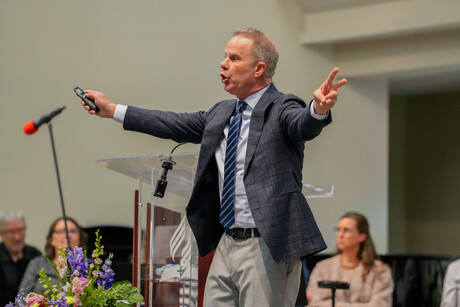
In addition to the construction work, the mission included public meetings focused on trauma and healing, held in the Christian part of the city. Over eight evenings, Lynette Frantzen, mental health counselor, addressed mental health aspects of trauma, while Sven Frantzen, Lacey Church pastor, presented biblical perspectives on suffering and restoration.
Ten community members attended at least one presentation, including two young men who participated every evening and expressed strong interest in learning more about the Bible and Jesus. Both were connected with local church leadership for continued follow-up.
Beyond the visible ministry outcomes, the mission deeply impacted the volunteers, strengthening faith, renewing commitment to service and reinforcing the urgency of sharing the hope found in Christ — a hope that rebuilds communities and heals hearts in postwar contexts.

Volunteers gather for a morning devotional.

A piece of artillery munition rests on the church floor, a reminder of the traces left behind by the war.

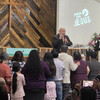
Lynette Frantzen, doctor, and Sven Frantzen, pastor, present community seminars on trauma and restoration.

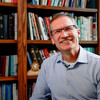
Sven Frantzen, Lacey Church pastor, (right) smiles with Goran Soldat, one of only two Adventists in Mostar.

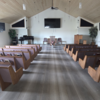
The Adventist church in Mostar was mostly destroyed due to the ongoing war between 1992 and 1995.

The Neretva River separates Mostar's predominantly Christian neighborhoods on the west from Muslim communities on the east.